

The Blog

Hydration Challenges for Athletes in the Winter
November 28, 2025
When you think about hydration, you probably think of hot summer days. But staying hydrated during the winter months is just as crucial for athletes, even if you don’t feel as thirsty. Cold weather can mask dehydration, impact performance, and make recovery more challenging. Here’s what you need to know about staying hydrated this winter.
Winter Hydration Challenges for Athletes
- Decreased Thirst Cues: Cold temperatures can suppress your thirst at times, making it easy to forget to drink water.
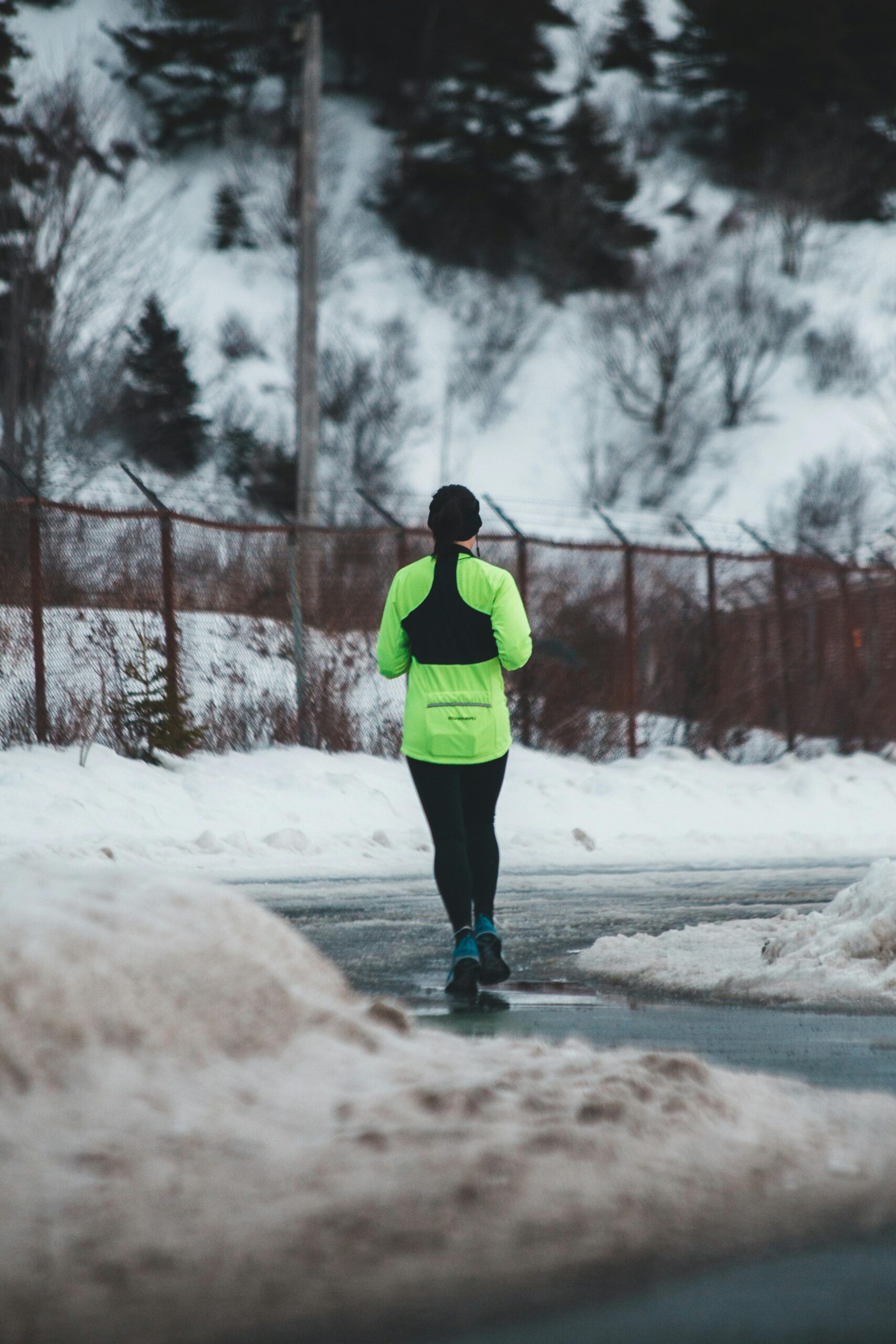
- Increased Fluid Loss: Winter training can lead to significant water loss by just breathing! When you see your breath in the cold, that’s moisture leaving your body!
- Sweat in Layers: While you may not notice sweat as much under multiple layers, you are still losing fluids when you train.
- Electrolyte Imbalance: Because of your layers, you may not notice your sweat and therefore your electrolyte loss. Electrolytes like sodium are still just as important during the colder months!

Practical Winter Hydration Tips for Athletes
If you know me, you know I love sharing simple tips to help you stay at the top of your game. Here are a few easy things you can do to stay hydrated this winter.
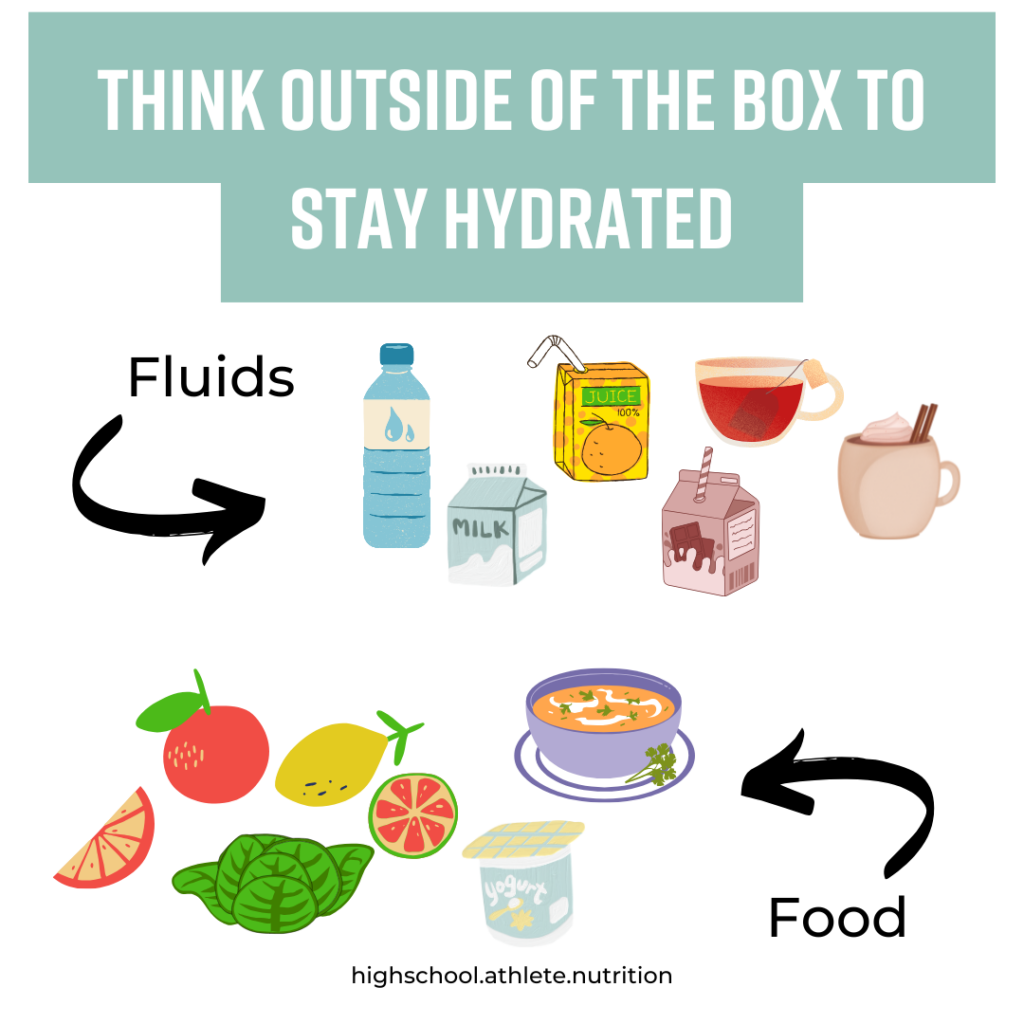
- Start Hydrated: It is easier to stay hydrated than it is to play catchup right before practice. Take a few sips of water right when you wake. Then with each meal, drink water, milk, or juice to maintain your hydration and energy for practice.
- Carry Warmer Fluids: Cold water bottles might not seem appealing in winter, so consider carrying an insulated thermos with room temperature or warm water.
- Track Your Intake: Set reminders to drink water throughout the day, especially if you don’t feel thirsty. Apps, alarms, or even just carrying a bright colored water bottle can help.
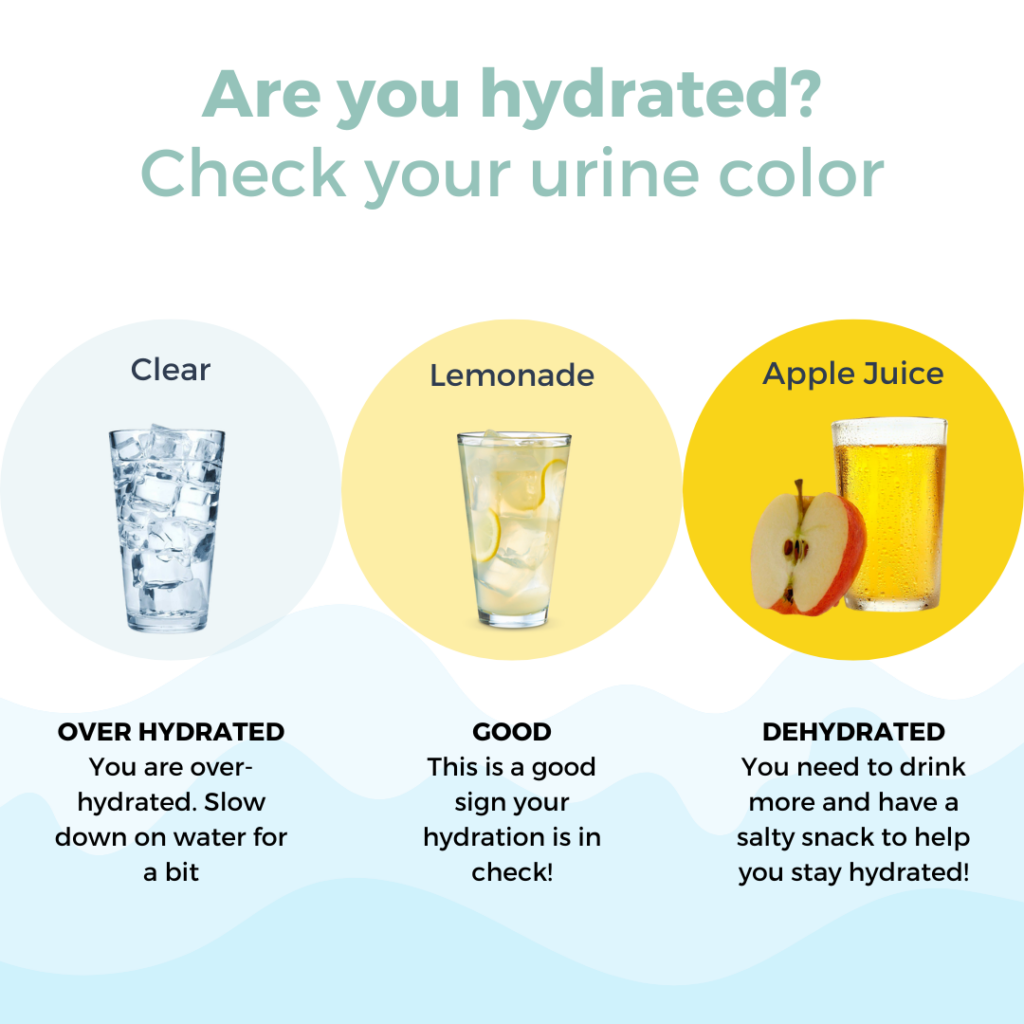
- Check the Color of Your Urine: A simple way to check hydration is by looking at your urine color. Pale yellow or lemonade colored urine usually indicates good hydration, while dark yellow or apple juice colored urine means it’s time to drink more!
- Incorporate Hydrating Foods: Winter fruits and vegetables like oranges, clementines, spinach, and soups are excellent ways to stay hydrated.
- Use Sports Drinks When Needed: If your training sessions last longer than an hour or are high intensity, consider adding a sports drink to replenish both fluids and electrolytes
- Don’t Forget Recovery Hydration: Replace fluid losses after exercise with chocolate milk, sports drinks, juice or water. Your recovery meal can also include soup with is a great way to replace sodium and fluids!
Stay Ahead of Dehydration
Hydration isn’t just for the summer months. Winter training presents unique challenges, but with the right strategies, you can stay hydrated and perform at your best. If you’re unsure about your hydration needs or need help creating a personalized plan, join me in the Academy. The Academy is your Sports Nutrition Library full of videos, fueling guides, and recipes to help you build a strong fueling and hydration plan.
References
- Casa, D. J., et al. (2015). National Athletic Trainers’ Association position statement: Fluid replacement for athletes. Journal of Athletic Training, 50(4), 331-349.
- Kenefick, R. W., & Cheuvront, S. N. (2014). Hydration for recreational sport and physical activity. Nutrition Reviews, 72(Suppl 2), 137-142.
- McDermott, B. P., et al. (2017). National Athletic Trainers’ Association position statement: Fluid replacement for the physically active. Journal of Athletic Training, 52(9), 877-895.


Be the first to comment